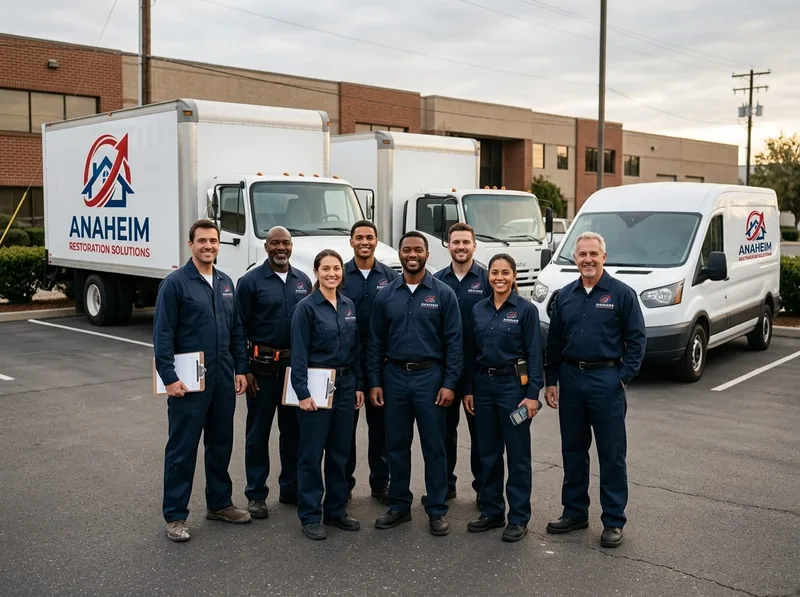
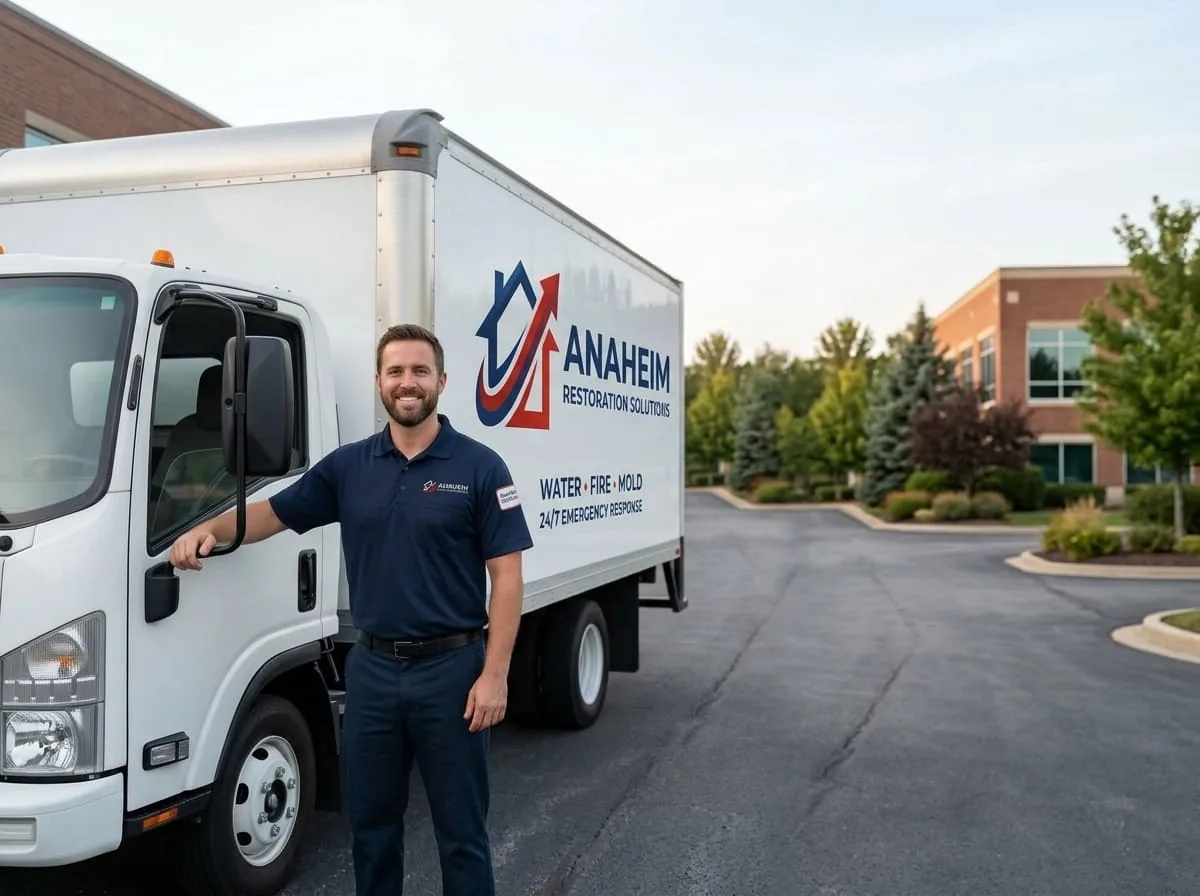
Water, fire, and mold damage rarely wait for convenient timing. A supply line fails at 2 a.m., a kitchen fire leaves smoke damage through a house, or a slow leak behind a wall turns into a mold problem months later. Anaheim Restoration Solutions exists to make the first, most important step easier: getting a property owner in Anaheim or elsewhere in Orange County connected, quickly, with a restoration professional equipped to respond.
This page explains how that connection works — what happens when you call, the standards the restoration professionals we work with follow, the area we cover, and how you'll hear from us along the way.
How the Emergency Call Process Works
When you call (714) 683-2359, you're not routed through a phone tree. The call is answered so your situation can be understood quickly: what's happened, where the property is, and how urgent it is.
- You describe the damage — active water, fire aftermath, visible mold, or a combination.
- You give the property address and confirm whether it's currently safe to remain inside.
- Based on that information, the call is matched to a licensed, insured restoration professional positioned to respond to your area.
- You're given a realistic expectation of when help will arrive, rather than a vague promise.
Because availability shifts hour to hour with call volume and technician location, the professional you're connected with may vary. What doesn't vary is the standard used to make the match: licensing, insurance, and the ability to respond on a 24/7 basis.
What Happens After You Call
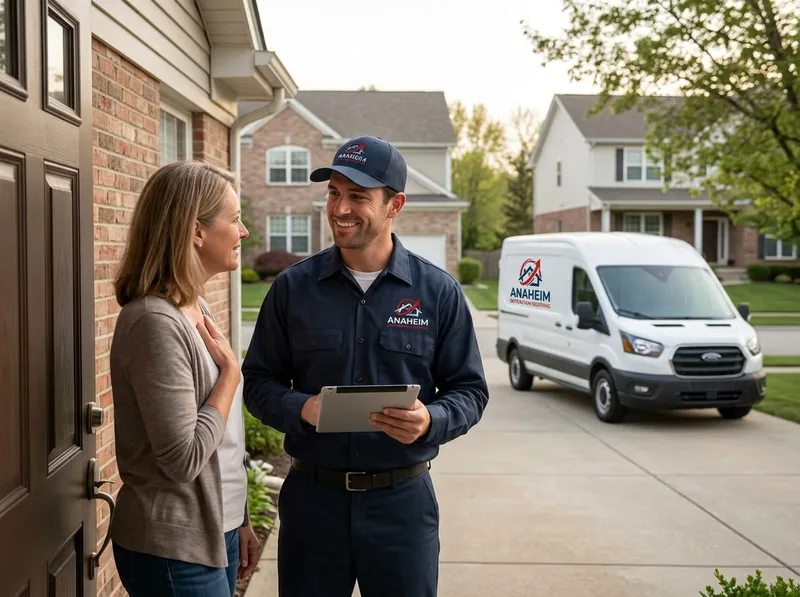
Once a restoration professional is dispatched, the general sequence of an emergency response follows a predictable pattern, even though every property is different:
- Assessment. The technician inspects the affected areas, checks for safety hazards — electrical exposure near standing water, structural instability, contamination — and identifies the scope of the damage.
- Mitigation. For water damage, this typically means extraction first, then moisture mapping to find out how far water has traveled behind walls, under flooring, or into ceilings. For fire damage, it means securing the property and beginning soot and smoke assessment. For mold, it means containment before any disturbance of the affected material.
- Drying or remediation. Structural drying equipment, air movers, and dehumidification are set up and monitored until moisture readings return to a safe range, or, for mold and fire work, remediation and cleaning proceed according to the scope identified.
- Documentation. Photos, moisture readings, and a written scope of work are typically provided, which matters if you're filing an insurance claim.
You should expect the professional on site to walk you through what they're finding and what they recommend before major work begins.
Standards the Restoration Professionals We Work With Follow
Restoration work in this industry is governed by recognized technical standards, not guesswork. The IICRC (Institute of Inspection, Cleaning and Restoration Certification) publishes the S500 standard for water damage restoration and the S520 standard for mold remediation — the reference documents most licensed restoration professionals are trained against.
Access to IICRC-certified restoration expertise is a baseline we look for when connecting a call. Restoration work is carried out by trained technicians using professional extraction and drying equipment, and the professionals we work with are equipped for 24/7 emergency response rather than scheduled-appointment-only service.
The Area We Cover
Calls are routed to restoration professionals serving Anaheim and the surrounding Orange County communities, including Anaheim Hills, Fullerton, Orange, Garden Grove, Santa Ana, and Buena Park, along with the smaller cities around them — Placentia, Yorba Linda, Cypress, Stanton, La Palma, Villa Park, Brea, La Habra, Westminster, Fountain Valley, Los Alamitos, and Tustin. See the full service area list for details specific to your city.
How We Communicate With You
Phone is the fastest way to reach us, and it stays the primary channel throughout an active emergency, since decisions about extraction, drying, or board-up often need to happen within hours, not days. If you reach out through the contact page instead, expect a call back to confirm details before anyone is dispatched.
Once a restoration professional is on site, most day-to-day communication — scheduling, drying progress, documentation for your insurer — happens directly between you and that technician or crew, since they're the ones with hands-on visibility into the property.