Flooring is often the material that shows water damage first and most visibly — cupping hardwood, lifting laminate, a carpet that squishes underfoot. What's salvageable depends heavily on the specific material, how long it sat wet, and whether water reached the subfloor underneath. This page walks through what to expect by flooring type.
Solid Hardwood
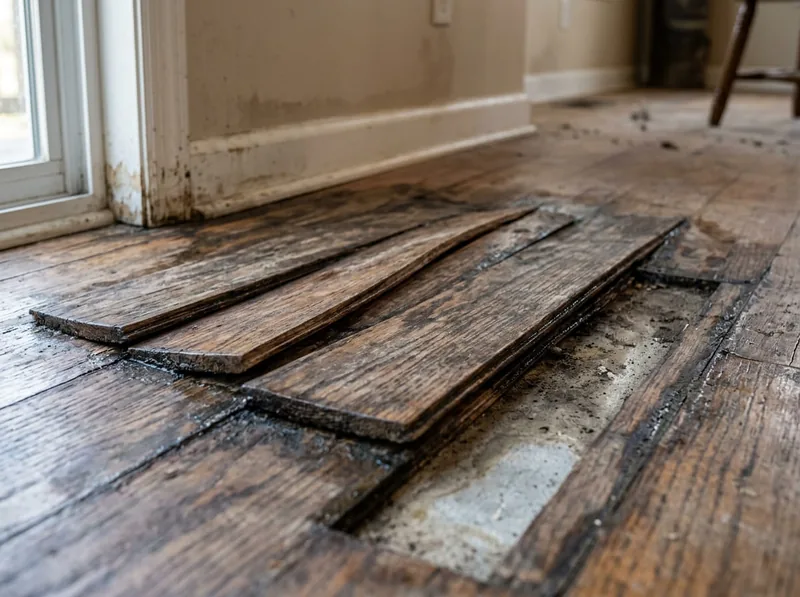
Hardwood reacts to water by absorbing it unevenly, which causes cupping (edges of boards rising higher than the center) as an early sign, followed by more severe buckling and warping if water exposure continues. Solid hardwood that's caught early — cupping but not yet buckled or delaminated — can sometimes be dried in place using specialized drying mats or injection drying systems that pull moisture up through the boards without removing them. Boards that have buckled, cracked, or separated from the subfloor generally need to be replaced.
Engineered Wood and Laminate
Engineered wood flooring has a thin real-wood veneer over a plywood or composite core, which tends to swell and delaminate when saturated rather than cup the way solid hardwood does — once that happens, drying in place usually isn't effective and replacement is more likely. Laminate flooring (a printed image layer over a fiberboard core) is the least water-tolerant of common flooring types; fiberboard swells permanently on contact with standing water and laminate is rarely salvageable after real saturation.
Tile and Stone
Tile and stone themselves are largely unaffected by water, but the situation underneath matters — grout lines can allow water through to the subfloor, and if that subfloor is wood rather than concrete, it can suffer the same damage as any other wood flooring even though the tile above looks fine. Tile floors involved in a water event still need a moisture check beneath the surface.
Carpet and Padding
Carpet fibers themselves often survive water exposure reasonably well if extracted quickly, but padding underneath acts like a sponge and rarely dries fully in place — padding that's been saturated for more than a few hours is typically removed and replaced rather than dried, both because full drying is unreliable and because wet padding left in place is a common source of hidden mold growth.
The Subfloor Question
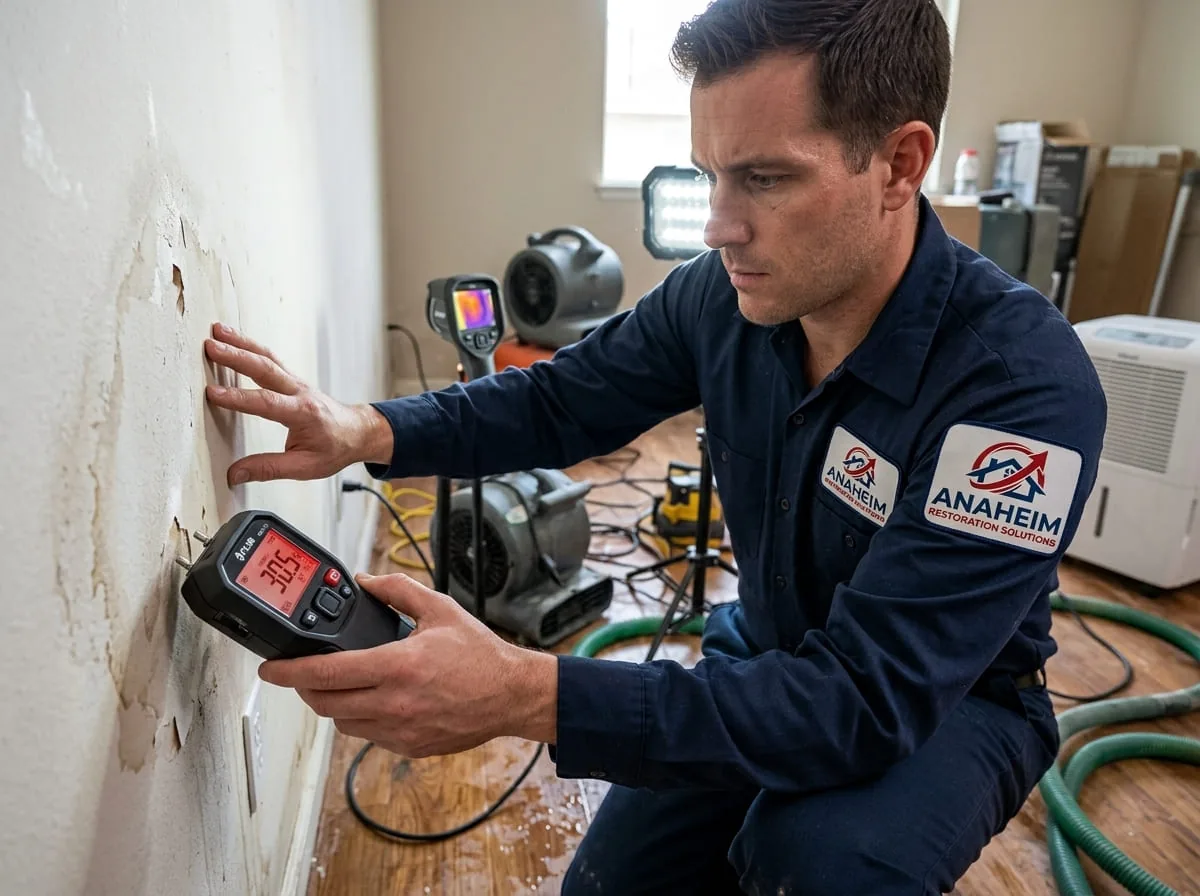
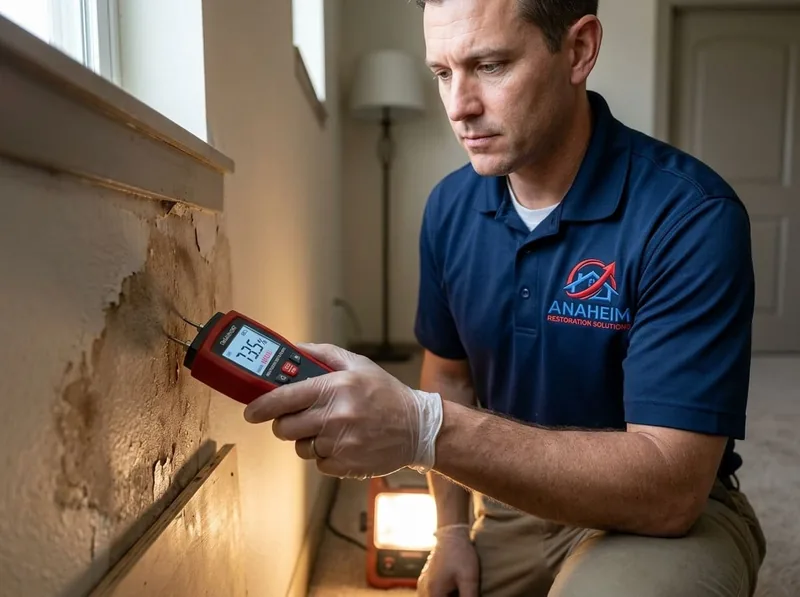
Whatever the visible flooring material, the subfloor underneath — usually plywood or concrete slab in Anaheim-area construction — determines a lot of the long-term outcome. A wood subfloor that's absorbed water needs to dry fully before new flooring goes down, or the new material will fail the same way. This is checked with moisture meters as part of the drying process, not assumed based on how the surface flooring looks.