Mold in a commercial property carries different stakes than a residential case — tenant leases, employee health policies, customer-facing space, and sometimes regulatory or landlord obligations all factor into how the job gets scoped. Anaheim Restoration Solutions connects property managers, business owners, and landlords with licensed, insured mold remediation specialists experienced in commercial buildings, from single-tenant retail spaces to multi-unit office and industrial properties.
Common Commercial Mold Scenarios
- Roof leaks affecting ceiling tiles, insulation, and structural framing in office or retail space
- Plumbing failures in shared walls or utility chases affecting multiple tenant spaces
- HVAC condensation issues in mechanical rooms or duct runs
- Restroom and break room leaks that go unnoticed after hours
- Mold discovered during a property transaction, lease turnover, or tenant improvement project
Scoping Around Your Business
Commercial mold remediation almost always has to work around continued operations, and our network's specialists plan for that from the first site visit. Containment can often be built to isolate the affected area while the rest of the building stays open, work can frequently be scheduled after hours or on weekends to minimize disruption, and multi-tenant buildings may need coordination with property management and neighboring tenants before work begins. Every commercial job gets scoped for the specific building and business situation rather than treated like a residential job at a larger scale.
The Remediation Process
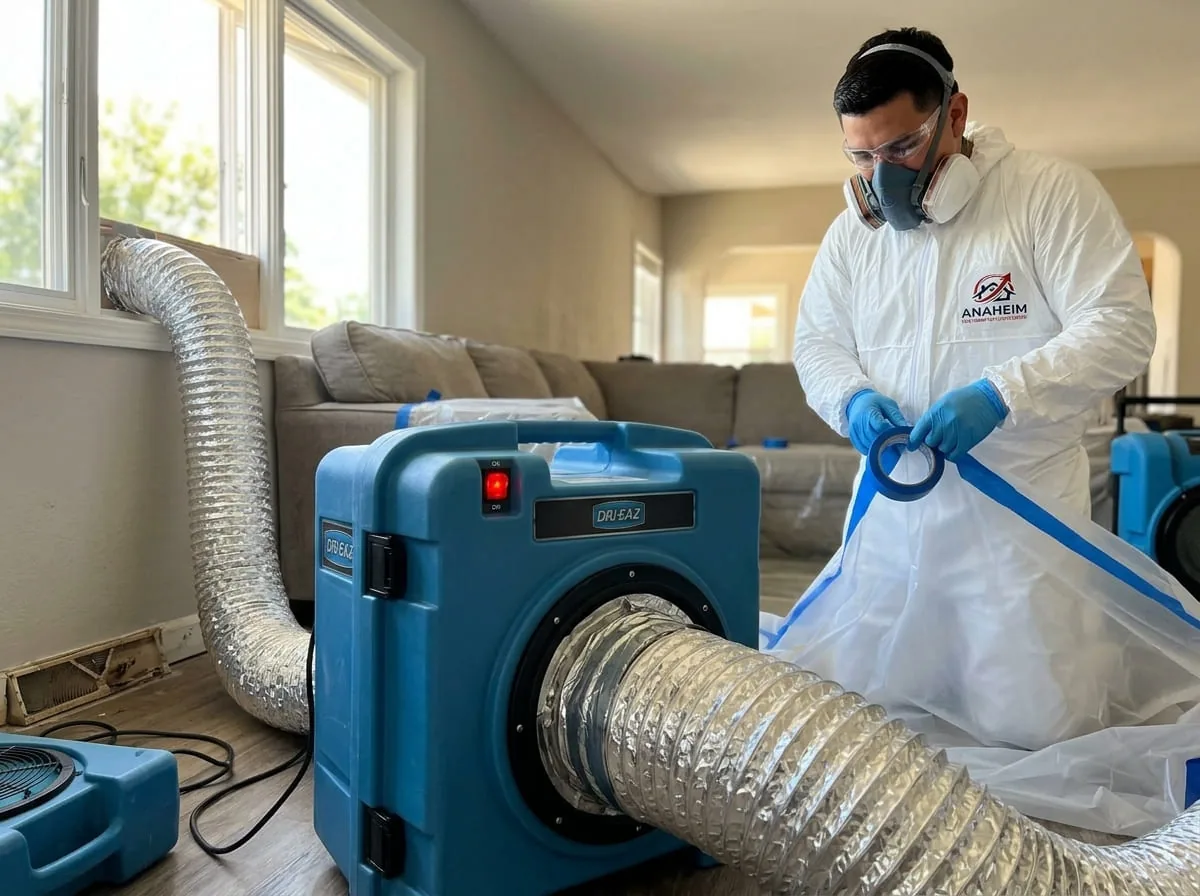
The core process mirrors residential work but at commercial scale: assess and document the affected area, contain it to prevent spread through shared HVAC or wall systems, remove unsalvageable material, clean and treat remaining surfaces, dry the space with commercial equipment, and correct the moisture source that caused the problem. For a leased space, a landlord, or a buyer who needs documented proof the space is clear, post-remediation verification and clearance testing is typically the final step before the space is returned to use.
When It Follows Water Damage
Commercial mold cases frequently start the same way residential ones do — with water damage that wasn't caught or dried quickly enough. A roof leak over a weekend, a burst supply line in a mechanical room, or a sprinkler system malfunction can all seed a mold problem before Monday morning. If the property has an active leak or recent flooding, commercial water damage restoration should be the first call, ideally at the same time as mold assessment.
Documentation for Landlords, Lenders, and Insurers
Commercial mold issues often come with a documentation requirement that residential cases don't — a landlord may need proof of remediation before renewing a lease, a lender or buyer may require clearance testing before closing, or a business's insurer may need a documented scope of work. Our network's specialists can provide the kind of documentation these situations typically call for, coordinated through mold inspection and mold testing and sampling as needed for your specific requirement.
Before Help Arrives
If you manage or occupy the affected space, restrict access to the area, avoid running HVAC systems that circulate air through it, and document the area with photos before any cleanup activity. If the mold is tied to an active leak near electrical equipment or panels, keep the area clear until a professional can assess it safely.