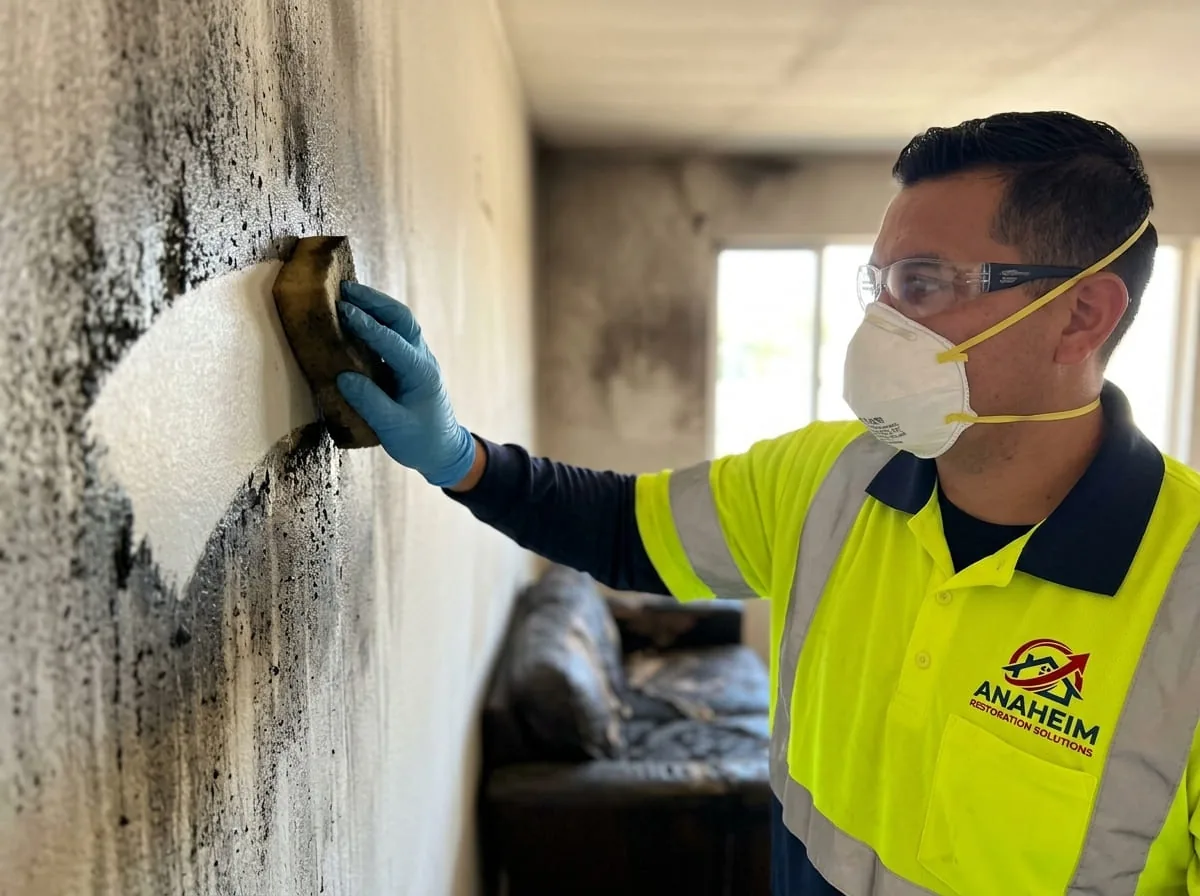
Smoke is the part of fire damage that reaches rooms the fire never touched. It moves through HVAC ductwork, gaps around light fixtures and outlets, and wall cavities, leaving residue and odor in spaces that look untouched at first glance. Smoke damage cleanup addresses that residue directly — as distinct from soot removal on hard surfaces and odor treatment, which are related but separate steps in a full fire damage response.
Signs of Smoke Damage
- A visible haze or discoloration on walls and ceilings, sometimes in rooms away from the fire
- Yellowish or brownish film on painted surfaces, window sills, or glass
- A smoky odor noticeable when the HVAC system runs
- Dust-like residue collecting near air vents
- Discoloration around light switches, outlets, and ceiling fixtures
How Smoke Travels Beyond the Room of Origin
Heat from a fire creates pressure that pushes smoke through any available gap — HVAC supply and return ducts, the space around electrical boxes, gaps under doors, and even through wall cavities via shared framing. This is why a kitchen fire can leave a noticeable smoke smell in an upstairs bedroom, and why smoke damage cleanup has to start with figuring out how far the smoke actually traveled rather than assuming it stayed near the source.
Types of Smoke Residue
Not all smoke behaves the same way, and the cleanup approach depends on which type is present:
- Wet smoke — from low-heat, smoldering fires. Leaves a thick, sticky residue with a strong odor.
- Dry smoke — from fast-burning, high-heat fires. Leaves a powdery, easier-to-clean residue but often spreads further.
- Protein smoke — from kitchen fires involving food. Nearly invisible but leaves an intense odor and a discoloring film on surfaces.
Common Causes of Smoke Damage
Kitchen fires, electrical fires from aging wiring or overloaded circuits, and fires that start in a neighboring unit or structure and drift smoke into an unaffected property are among the most common sources of smoke damage seen in both homes and businesses.
The Smoke Damage Cleanup Process
A thorough smoke cleanup starts with tracing where residue actually reached — including HVAC systems, which are often inspected and cleaned separately since ductwork can recirculate smoke odor for months if left untreated. Affected surfaces are then cleaned using methods matched to the smoke type and surface material, and the property is checked in areas that don't look damaged but may still carry residue, like closets, cabinet interiors, and behind wall-mounted fixtures.
Residential and Commercial Smoke Cleanup
In homes, smoke cleanup often overlaps with contents cleaning, since furniture and belongings absorb residue too. In commercial spaces, larger and more complex HVAC systems mean smoke can spread across a much bigger footprint, and cleanup is often sequenced around code inspections required before a business can reopen.