A mold inspection is the step before remediation begins — a trained technician examines the property, identifies visible or suspected mold growth, looks for the moisture source behind it, and puts together a scope of what remediation work is actually needed. Anaheim Restoration Solutions connects property owners with mold inspection professionals for situations ranging from a specific musty smell in one room to a full pre-purchase or pre-lease property check.
When a Mold Inspection Makes Sense
- You notice a musty odor but can't find visible mold
- You had a water leak or flood recently and want to confirm the area dried properly
- You're buying, selling, or leasing a property and want documentation of its current condition
- You've seen discoloration and want to know the extent before deciding on next steps
- A previous water damage repair is complete and you want to confirm no hidden moisture or mold remains
What a Mold Inspection Involves
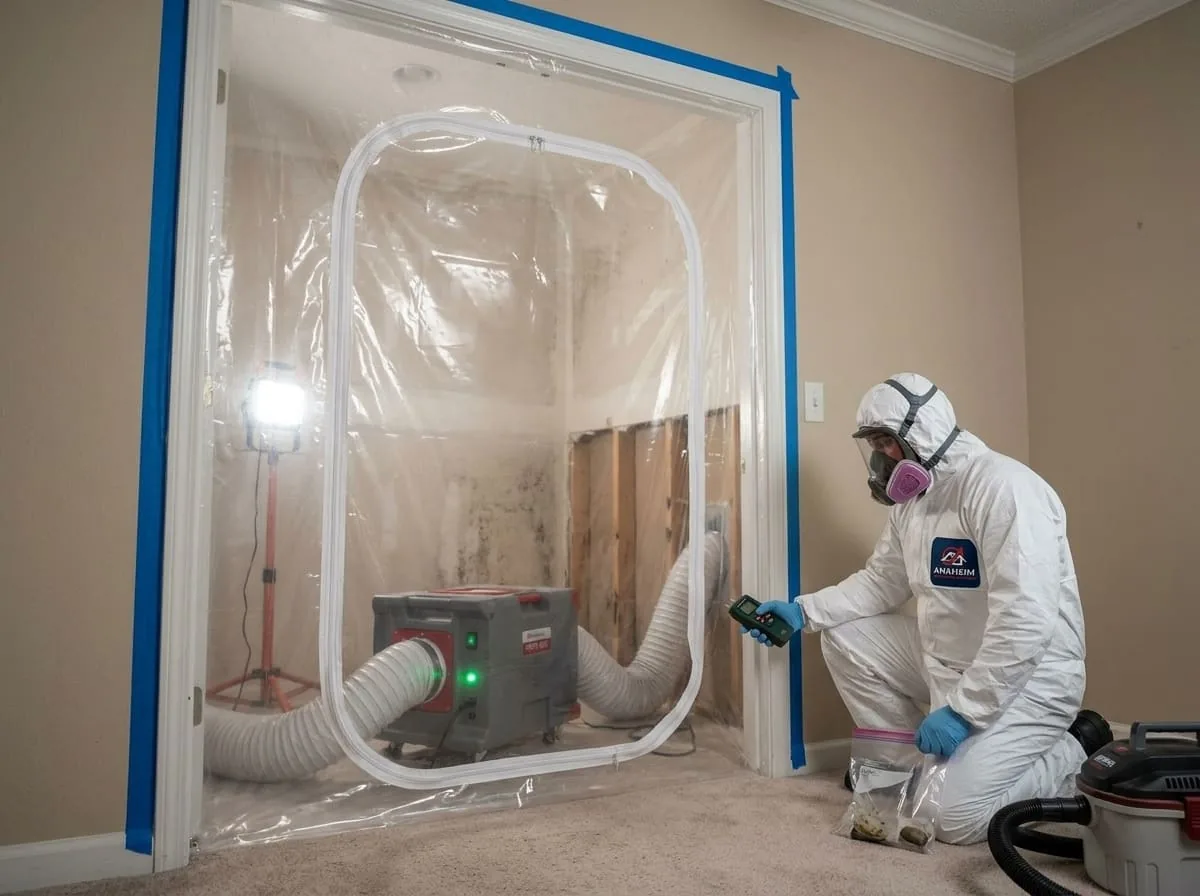
A mold inspection generally combines a visual assessment of the property with moisture measurement tools. The technician walks the areas of concern, looks for visible growth, water staining, or material damage, and uses a moisture meter or similar tool to check materials that look normal on the surface but may be holding hidden dampness — a common situation behind drywall, under flooring, or inside a crawl space. Based on what's found, the technician will describe whether visible growth is present, where moisture is coming from, and what remediation — if any — is recommended.
Some inspections also include sampling, where air or surface samples are collected and sent to a laboratory for analysis. That's a distinct add-on service — see Mold Testing & Sampling for how that works and when it's typically used. A visual inspection with moisture measurement can often answer the practical question — is there a problem, and where — without lab sampling, though sampling adds documented, third-party results when that's specifically needed.
What You Get From an Inspection
After the inspection, you should have a clear picture of: whether mold is present and roughly how extensive it is, what's causing the moisture that's allowing it to grow, and what remediation work — if any — is recommended to address it. This gives you what you need to make a decision, get a remediation estimate, or move forward with a real estate transaction or insurance claim with actual information rather than guesswork.
Mold Inspection After Water Damage
One of the most common reasons for a mold inspection is a recent water event — a past leak, flood, or appliance failure where you're not sure whether the area dried completely or whether mold has started. If that's your situation, our Mold After Water Damage page walks through what to look for, and pairing the inspection with a check on how the original structural drying was handled can settle the question directly.
Residential and Commercial Inspections
Mold inspections apply to homes, rental units, and commercial buildings alike. Commercial and multi-tenant inspections often need to account for shared walls, HVAC systems, and common areas, while residential inspections tend to focus on one property and a more limited set of moisture-prone rooms.