
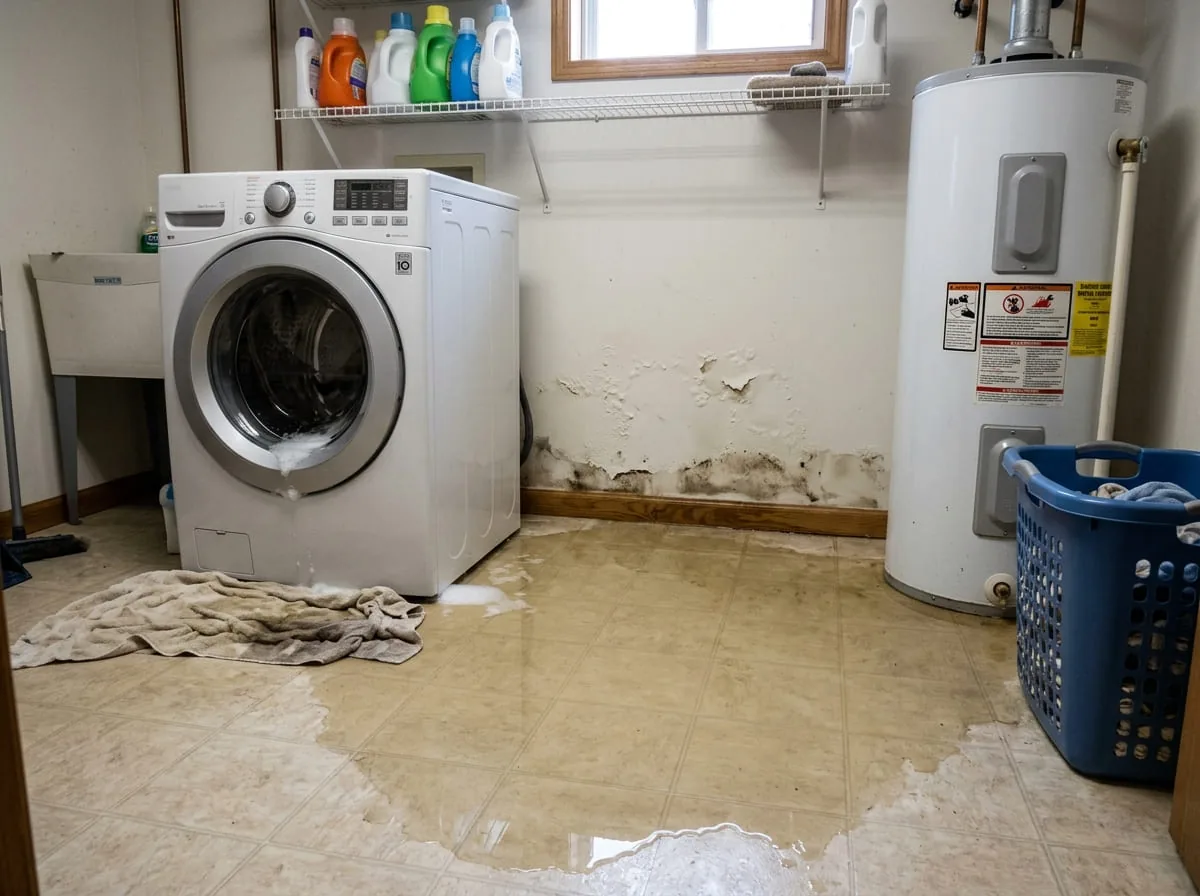
Ask a restoration professional what actually causes most water damage calls in the Anaheim area, and storms rank well below the answer you'd expect: appliances. A failed supply hose, a water heater that finally gives out after years of quiet service, a dishwasher seal that stops sealing — these everyday failures account for a large share of residential water damage, and they tend to happen without much warning.
The Usual Suspects
- Water heaters — tanks fail with age, sometimes gradually (a slow weep at the bottom seam) and sometimes all at once, releasing the full tank volume.
- Washing machines — supply hoses, especially older rubber ones, are prone to bursting under constant water pressure; braided stainless steel hoses are more reliable but not immune to failure.
- Dishwashers — door seals, supply lines, and drain hose connections can all leak, often pooling under cabinetry before it's noticed.
- Refrigerators with water/ice lines — a small supply line behind the unit is easy to overlook and can leak slowly for a long time before anyone checks behind the fridge.
- Toilets — supply line and wax ring failures, plus tank overflow from a stuck fill valve.
Why These Leaks Go Unnoticed Longer
Appliance leaks often happen behind or underneath the appliance itself, out of sight during normal use. A slow leak under a dishwasher or behind a refrigerator can run for weeks before it's discovered — usually when flooring starts to feel soft, cabinetry starts to swell, or a musty smell develops. By the time it's noticed, the water has often already reached subflooring or an adjoining wall, which is why professional moisture mapping matters even for what looks like a contained appliance leak.
Older Anaheim Homes and Aging Appliances
Many homes in Anaheim's postwar tract neighborhoods have gone through several rounds of appliance replacement over the decades, and supply hoses and connections don't always get upgraded at the same time as the appliance itself. A brand-new washing machine connected to an old rubber supply hose still carries the same failure risk as the appliance it replaced. It's worth checking supply line age and material whenever an appliance is installed or replaced.
Cleanup and Prevention
- Extraction and drying follow the same core process as other water damage, scaled to the affected area — often a kitchen, laundry room, or bathroom footprint.
- Cabinetry and flooring near the appliance get particular attention, since these materials sit closest to a slow, unnoticed leak.
- Once dried, replacing rubber supply hoses with braided stainless steel, and periodically checking behind refrigerators and under sinks, reduces the odds of a repeat event.