Extraction removes the water you can see. Structural drying deals with the water you can't — the moisture that's soaked into drywall, wood framing, subflooring, and insulation after a leak, flood, or burst pipe. This is the part of the restoration process that determines whether a property fully recovers or ends up with hidden rot, warping, or mold months later. It's also the part that's easiest to underestimate, because a room can look and feel dry to the touch well before it actually is.
Why "Looks Dry" Isn't the Same as "Is Dry"
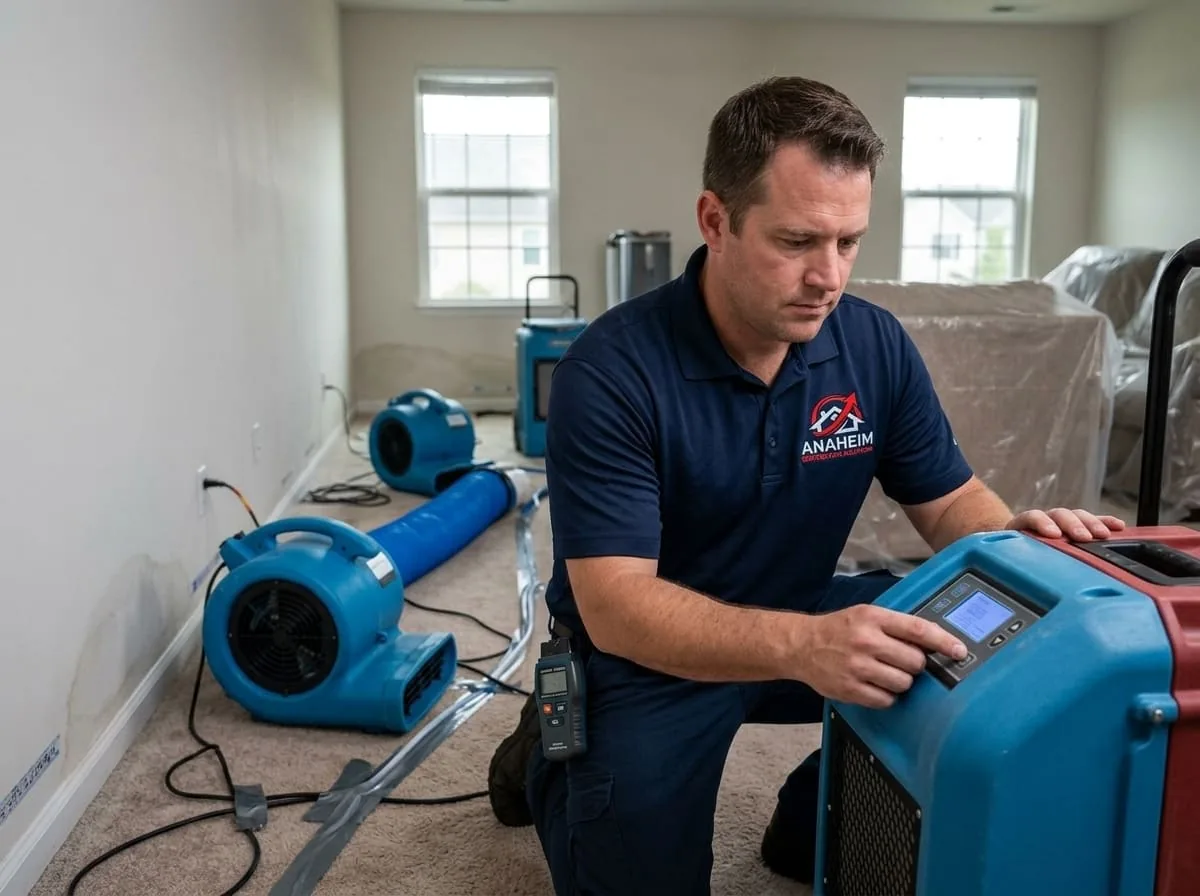
Surface moisture evaporates quickly. Moisture trapped inside a wall stud, under a baseboard, or in a subfloor evaporates much more slowly, and a room can feel comfortable while framing behind the drywall is still holding damaging levels of moisture. That's why professional drying relies on instruments, not touch or appearance — moisture meters measure the actual moisture content of a material, and thermal imaging cameras help locate temperature differences that indicate wet areas behind finished surfaces before anyone opens a wall to check.
The Equipment Behind the Process
- Air movers — high-velocity fans that accelerate evaporation by moving air across wet surfaces.
- Low-grain-refrigerant (LGR) dehumidifiers — pull moisture out of the air so it doesn't just resettle on nearby surfaces.
- Moisture meters — measure moisture content directly in wood, drywall, and other materials.
- Thermal imaging cameras — help locate temperature anomalies consistent with hidden moisture behind walls or under flooring.
- Drying mats and injection systems — used in some hardwood flooring cases to draw moisture out from beneath the surface without full removal.
Anaheim's Climate Helps — Once Equipment Is Running
Anaheim's dry, warm climate is generally favorable for structural drying compared to humid-climate regions, since lower ambient humidity gives moisture somewhere to go once it's released from materials. But that advantage only kicks in after extraction and equipment placement — a closed-up wet room with no airflow holds moisture just as stubbornly here as anywhere else. Professional drying takes advantage of the local climate rather than relying on it alone.
Monitoring Over Days, Not Hours
Drying equipment is typically placed on day one, but the job isn't complete until moisture readings confirm materials have returned to a normal range — often a process of several days with follow-up visits to check progress and adjust equipment placement. Ending the process early because a room "feels dry" is one of the most common ways water damage turns into a mold problem later. See mold prevention & moisture control for how drying and mold risk connect directly.