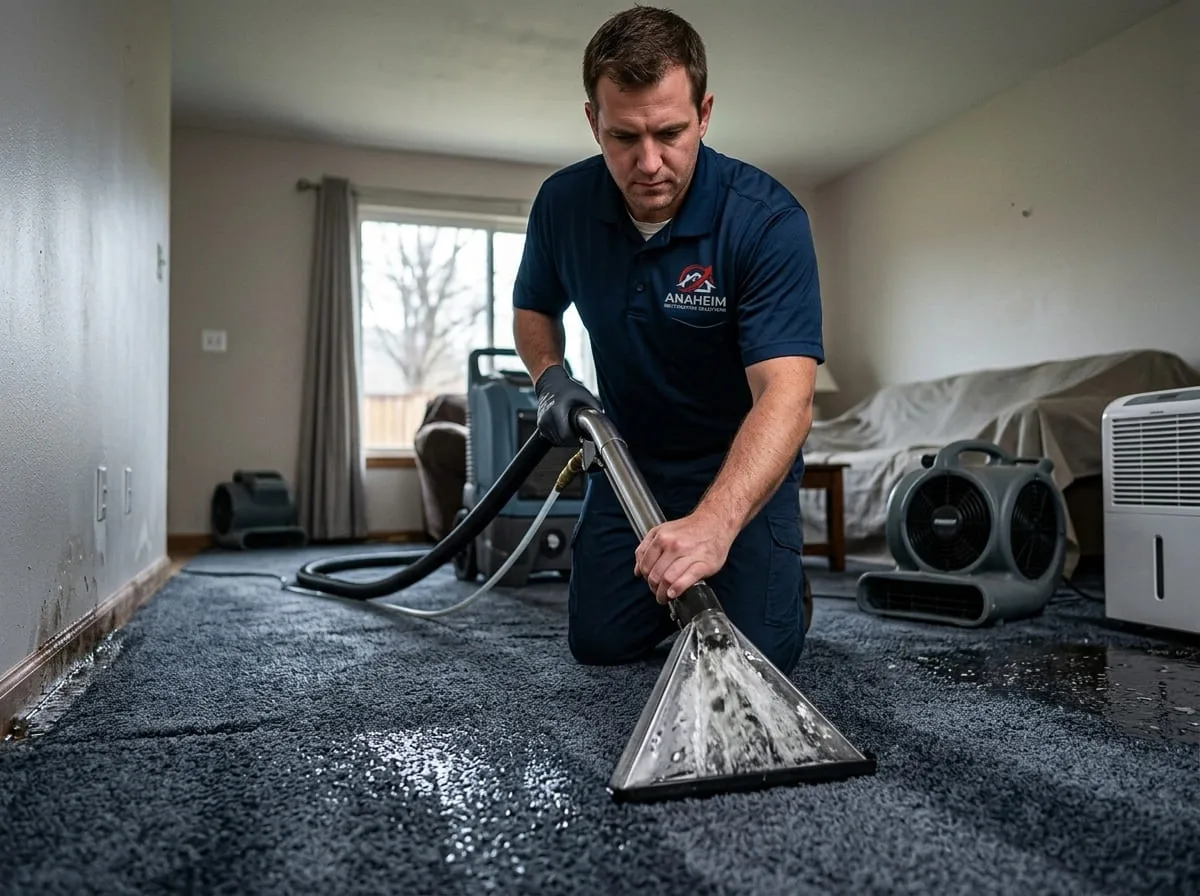
Water damage in a home isn't just a structural problem — it's a disruption to daily life. Kids still need to get to school, someone still needs a working kitchen, and personal belongings that can't simply be replaced need careful handling. Residential water damage restoration accounts for all of that alongside the technical work of extraction and drying.
Anaheim's Housing Mix Shapes the Job
A meaningful share of Anaheim's housing stock dates to the rapid postwar tract-home boom of the late 1950s and 1960s, often built with galvanized steel plumbing that's now well past the age where pinhole leaks and pipe failures become common. Homes in Anaheim Hills and other areas developed from the 1970s onward tend to have newer copper or PEX plumbing, with different water damage patterns tied more to appliances, irrigation systems, and hillside drainage than to pipe corrosion. Either way, virtually every home in the area is built slab-on-grade rather than over a basement, which means water damage typically shows up at floor level, in walls, and in ceilings rather than pooling below-grade.
Room-by-Room Considerations
- Kitchens — dishwasher and refrigerator supply line leaks, often going unnoticed under cabinetry until flooring or cabinets show damage.
- Bathrooms — toilet supply line and wax ring failures, shower pan leaks that show up as damage on the floor below.
- Laundry rooms — washing machine supply hose failures, one of the more common sudden-loss events in a home.
- Bedrooms and living areas — usually affected by water traveling from elsewhere (upstairs, an adjoining wall) rather than originating there.
Protecting What Matters Most
Furniture, photographs, documents, and other belongings get separated early in the process — items that can be dried or cleaned are set aside for that, and items beyond saving are documented for your insurance claim before disposal. Restoration professionals are used to working carefully around a home that's still lived in, not just around the damage itself.
Can You Stay in the House During Drying?
In most single-incident cases — a leak, a burst pipe, an appliance overflow — yes, with the affected rooms closed off while drying equipment runs. Larger events, contaminated water, or damage affecting essential systems (only bathroom, kitchen) may require temporary relocation. A restoration professional can tell you what to expect once they've assessed your specific situation.