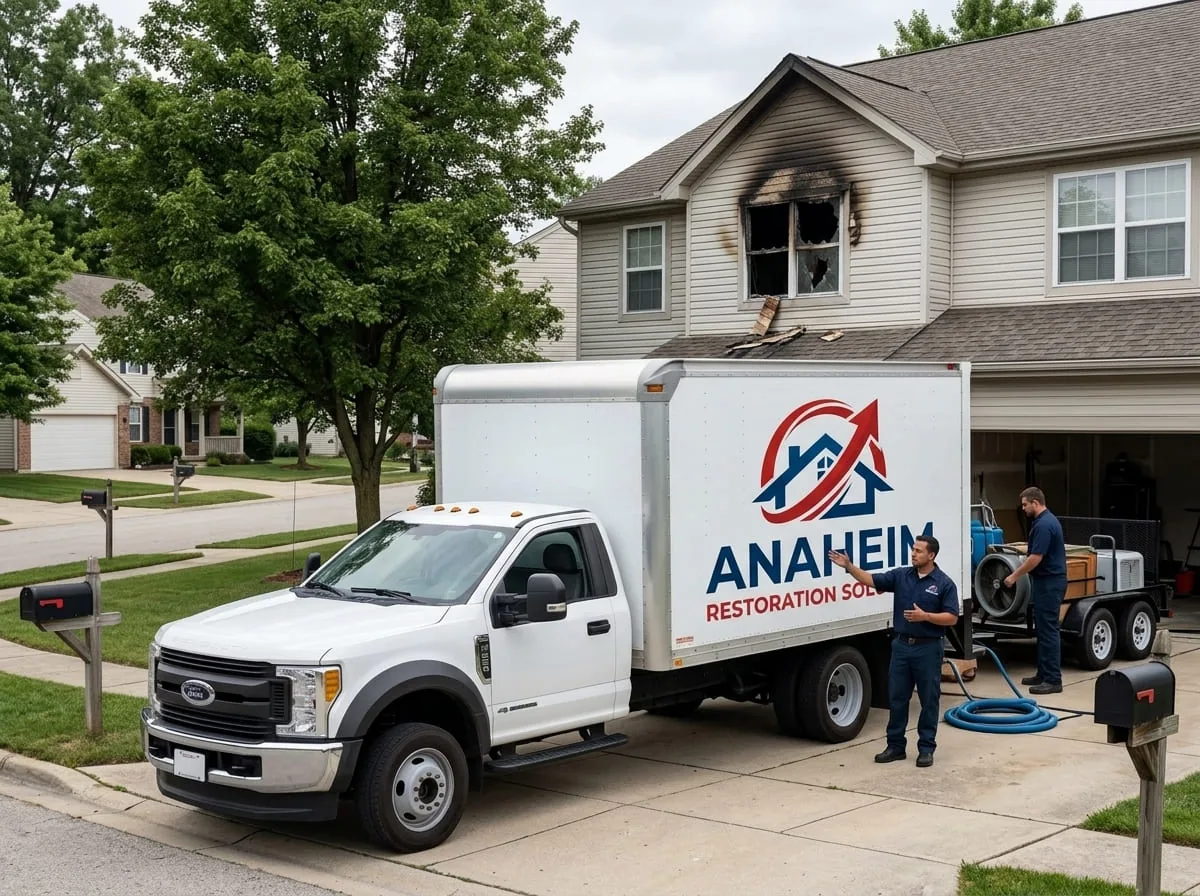
Fire damage restoration covers everything that happens between the fire department clearing a property and the property being safe, clean, and livable again. That includes securing the structure, removing smoke and soot residue, eliminating odor, drying out water used during suppression, cleaning or replacing contents, and — when the damage is structural — rebuilding. Few homeowners or business owners have been through this before, and the number of moving pieces can feel overwhelming on top of an already stressful event.
Anaheim Restoration Solutions exists to make the first call simple. Describe what happened and the property's condition, and the request is routed to a licensed, insured restoration professional who handles fire damage response in the Anaheim area, day or night.
Why Fire Damage Restoration Can't Wait
Fire damage keeps getting worse after the flames are out. Soot is acidic and begins etching into metal, glass, and grout within hours to a couple of days. Smoke odor bonds more permanently to drywall, insulation, and fabric the longer it sits. And nearly every structure fire involves firefighting water — from hose lines, sprinkler systems, or both — that soaks into flooring, subfloor, and wall cavities and needs to be extracted and dried before mold becomes a second problem layered on top of the fire.
Fire Damage Restoration Services
- Emergency Fire Damage Restoration — first response, safety assessment, and stabilization in the hours after a fire.
- Smoke Damage Cleanup — clearing smoke residue and identifying how far it traveled through the structure.
- Soot Removal — surface-specific cleaning of the acidic residue fire leaves behind.
- Smoke Odor Removal & Deodorization — treating the odor that lingers after visible soot is gone.
- Firefighting Water Damage Cleanup — extraction and drying of the water used to put the fire out.
- Commercial Fire Damage Restoration — response scaled for businesses, multi-tenant buildings, and code requirements.
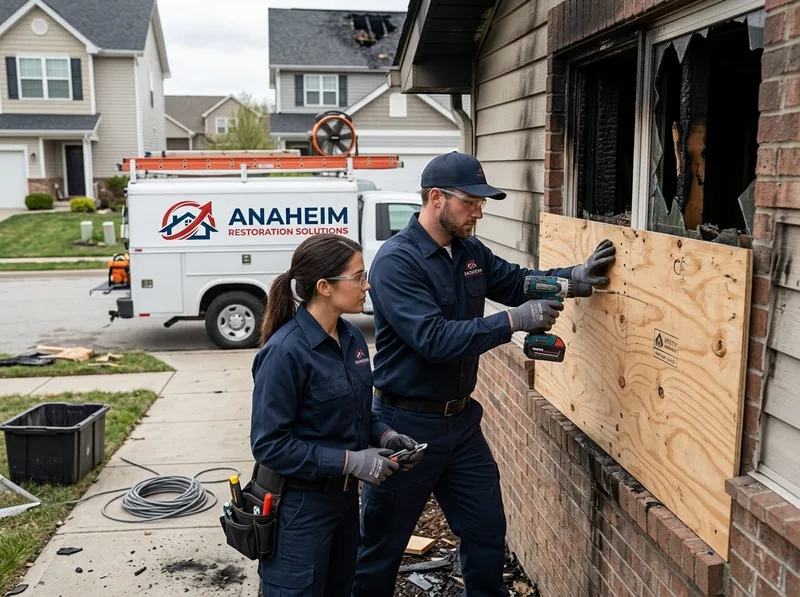
- Emergency Board-Up & Tarping — securing broken windows, doors, and roof openings.
- Contents Cleaning & Pack-Out — inventory, cleaning, and storage of belongings during repairs.
- Fire Damage Repairs & Reconstruction — rebuilding what the fire damaged structurally.
How the Restoration Process Generally Works
Most fire damage jobs move through the same broad phases, even though the order shifts depending on how the fire started and how much of the structure it reached: securing the property, extracting any firefighting water and beginning structural drying, removing soot and smoke residue from salvageable surfaces, treating for odor, cleaning or packing out contents, and finally repairing or rebuilding damaged framing, drywall, and finishes. A restoration professional walks the property first and builds a plan around what's actually there rather than a one-size-fits-all checklist.
Fire Damage in Anaheim Homes and Businesses
Anaheim's neighborhoods include a large stock of homes built during the postwar building boom that followed Disneyland's 1955 opening, alongside newer construction in master-planned areas like Anaheim Hills. Older housing stock, older appliances, and aging electrical systems are common contributors to residential fires generally, and commercial kitchens and multi-tenant buildings carry their own fire risk profile. Whatever the property type, the aftermath almost always involves both fire damage and water damage from suppression efforts — which is part of why fire and water restoration overlap so heavily in practice.