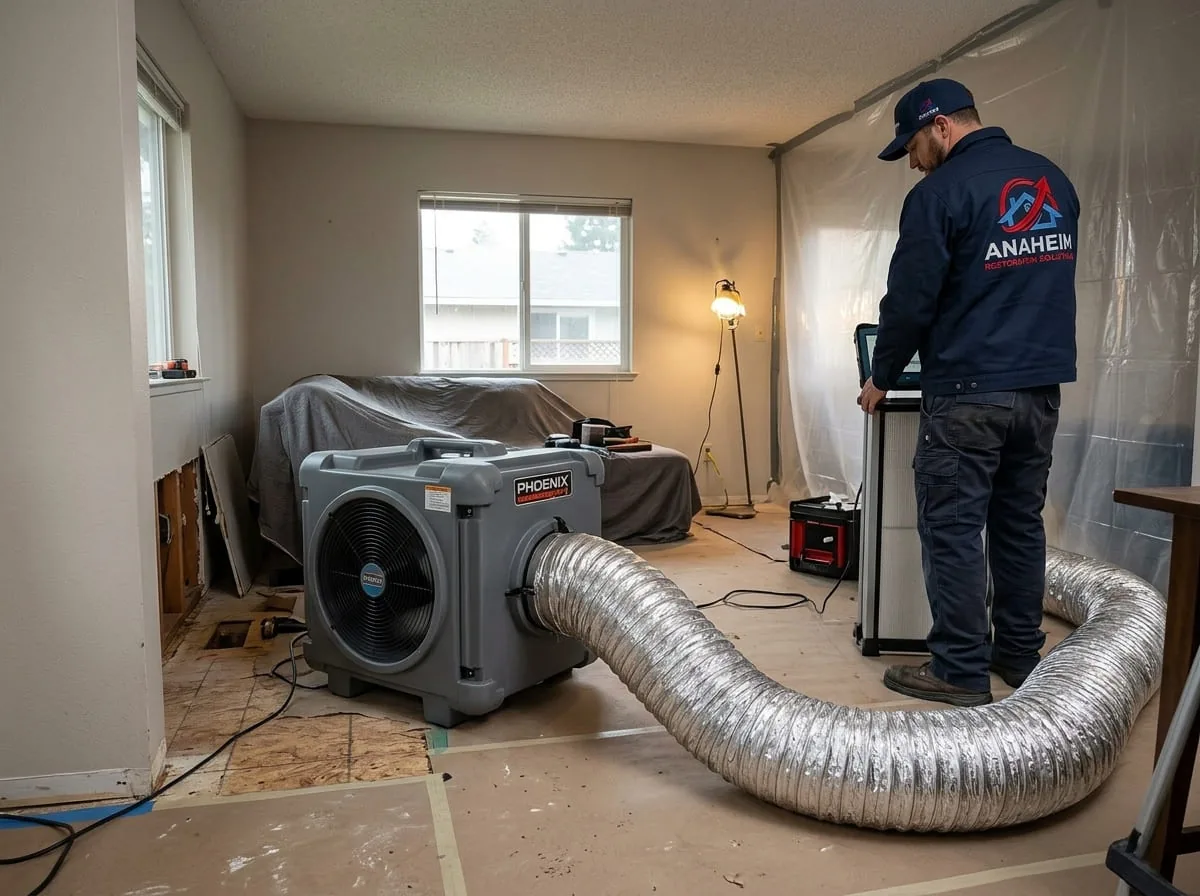
Post-remediation verification — often called clearance testing — is the final check performed after mold remediation work is finished, before containment barriers come down and the space is returned to normal use. It answers a specific question: did the remediation work achieve the condition it set out to achieve? Anaheim Restoration Solutions connects property owners with professionals who can perform this verification step and provide documentation of the result.
Why Clearance Testing Matters
- It confirms remediation work was completed to the extent intended before you resume normal use of the space
- It provides documentation for insurers, landlords, buyers, or lenders who require proof the work is finished
- It catches any missed areas before containment comes down and the opportunity to easily re-access affected material is gone
- It gives you, as the property owner, independent confirmation rather than just the remediation contractor's own assessment
What the Verification Process Involves
Verification typically combines a visual re-inspection of the remediated area with moisture measurement to confirm the space is fully dry, and — depending on what's needed for your situation — air or surface sampling sent to an independent laboratory for analysis. The specific combination used depends on what's being confirmed, what your insurer, landlord, or transaction requires, and what the original scope of work called for. Because requirements vary by situation, the professional handling your verification will explain what's being checked and what the results mean for your specific case, rather than applying a generic checklist to every job.
We don't publish a fixed pass/fail number here, because what counts as an acceptable result can depend on the property, the original scope of remediation, and any specific requirement from an insurer, lender, or landlord. The technician or independent lab handling your case will walk you through what the results mean for your situation.
Who Performs the Verification
Where lab sampling is part of the verification, samples are sent to an independent, third-party laboratory rather than analyzed by the same company that performed the remediation — that separation is part of what makes the result meaningful as documentation. See Mold Testing & Sampling for more detail on how the sampling side works.
When You'll Typically Need This
- After any remediation project where a landlord, lender, buyer, or insurer requires documented proof of completion
- Before re-occupying a space that was vacated during larger remediation work
- Before removing containment on a commercial job, especially in a multi-tenant building
- As part of closing out an insurance claim tied to mold remediation
- For your own confirmation and peace of mind, even when nobody specifically requires it
If Verification Doesn't Pass
If a verification check identifies remaining issues — a missed area, a moisture reading that's still elevated, or a sample result that doesn't meet the agreed benchmark for your case — the remediation contractor typically returns to address the specific area identified before a follow-up check is performed. This is a normal part of the process on more complex jobs, not a sign that something went wrong with the original work.
Related Services
Clearance testing is the last step in a sequence that usually starts with mold inspection, moves through remediation itself — whether residential or commercial — and finishes here. If your case started with a water event, Mold After Water Damage and Mold Prevention & Moisture Control After Water Damage cover the earlier stages of that same situation.