Soot isn't ordinary dirt, and treating it that way tends to make things worse. It's a fine, oily, acidic particulate that clings to surfaces on contact and begins chemically etching some materials within hours of a fire. Soot removal is a surface-by-surface process — what works on painted drywall can permanently damage polished metal or glass, so the right method depends heavily on what the soot landed on.
What Makes Soot Different From Ordinary Dirt or Ash
Soot particles are extremely fine — small enough to work into the pores of paint, grout, and fabric — and carry an acidic residue from the combustion process. That acidity is what drives the etching and discoloration seen on metal fixtures, glass, and porcelain when soot is left in place for even a few days. It's also why wiping soot with plain water often smears it deeper into a surface instead of lifting it off.
How Soot Affects Different Surfaces
- Drywall and painted surfaces — residue sits on top initially but can stain permanently if not addressed quickly.
- Wood and cabinetry — soot works into the grain and finish, especially on unsealed or older wood.
- Metal fixtures and hardware — among the fastest to show acid etching and pitting.
- Fabric and upholstery — soot embeds into fibers and often carries odor along with it.
- HVAC components — soot drawn through the system coats interior duct surfaces and can recirculate.
Why Soot Removal Is Time-Sensitive
The acid etching that damages metal, glass, and grout accelerates the longer soot sits, particularly in Southern California's warmer indoor temperatures where residue can bake onto a surface. A metal fixture that could be cleaned and polished on day one may need replacement by day four or five. That timeline is a major reason soot removal is treated as an early step in the overall fire damage restoration process rather than something to schedule around.
Soot Removal Techniques
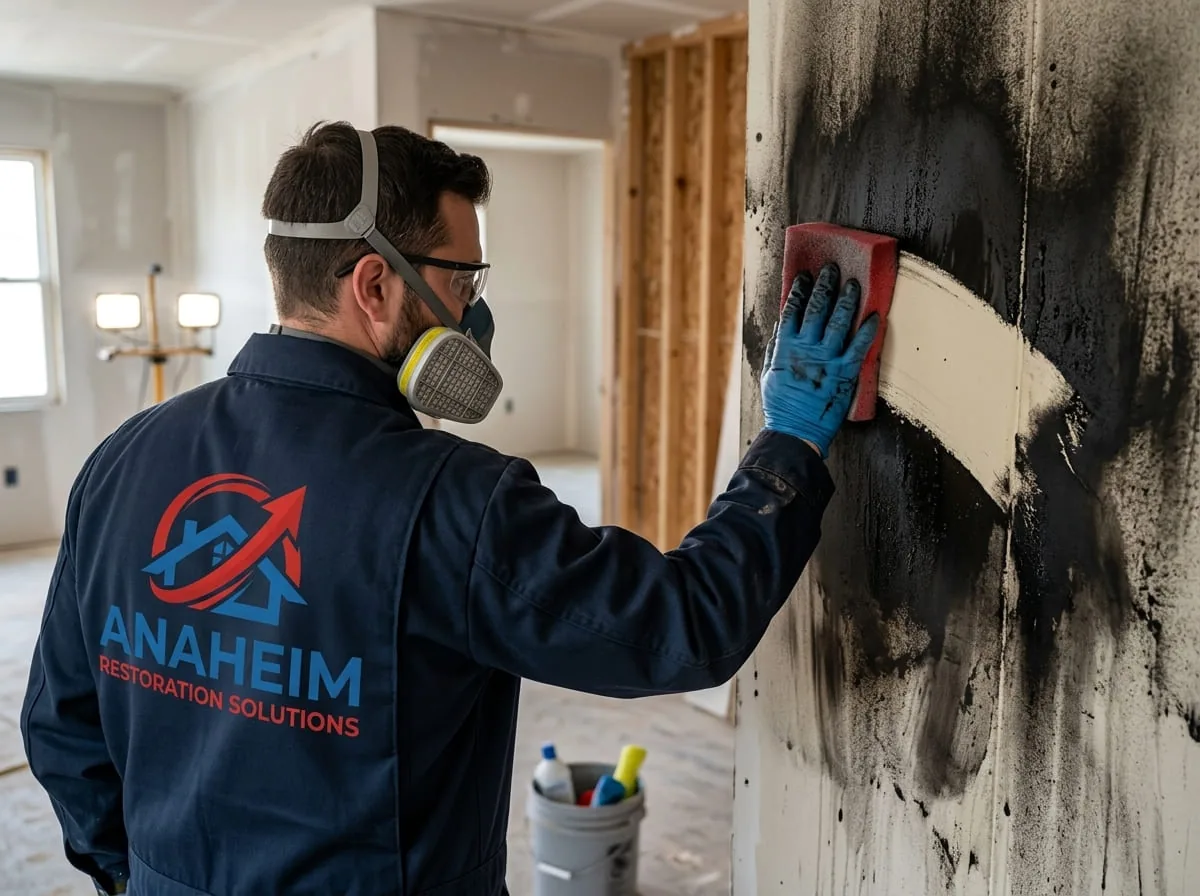
Technicians match the method to the surface and soot type: dry chemical sponges lift dry-smoke residue without smearing it, specialized cleaning solutions target wet-smoke films, HEPA vacuuming captures loose particulate before wet cleaning begins, and media or soda blasting can be used on masonry, brick, or metal where appropriate. Wet cleaning methods are used deliberately and only where they won't drive residue deeper into the material.
What Can Be Cleaned vs. What Typically Needs Replacement
Hard, sealed, non-porous surfaces — tile, glass, most finished wood, sealed metal caught early — respond well to professional cleaning. Porous materials heavily saturated with soot, or metal and glass left untreated long enough to etch, more often need replacement. An in-person assessment is the only reliable way to know which category a given surface falls into.
Residential and Commercial Soot Removal
Homes typically need soot addressed across a mix of finished surfaces, fabric, and personal items, while commercial properties often have larger areas of hard flooring, metal fixtures, and equipment where fast turnaround matters for reopening. Both benefit from the same core rule: the sooner soot removal starts, the more surfaces stay in the "clean it" category instead of the "replace it" one.