
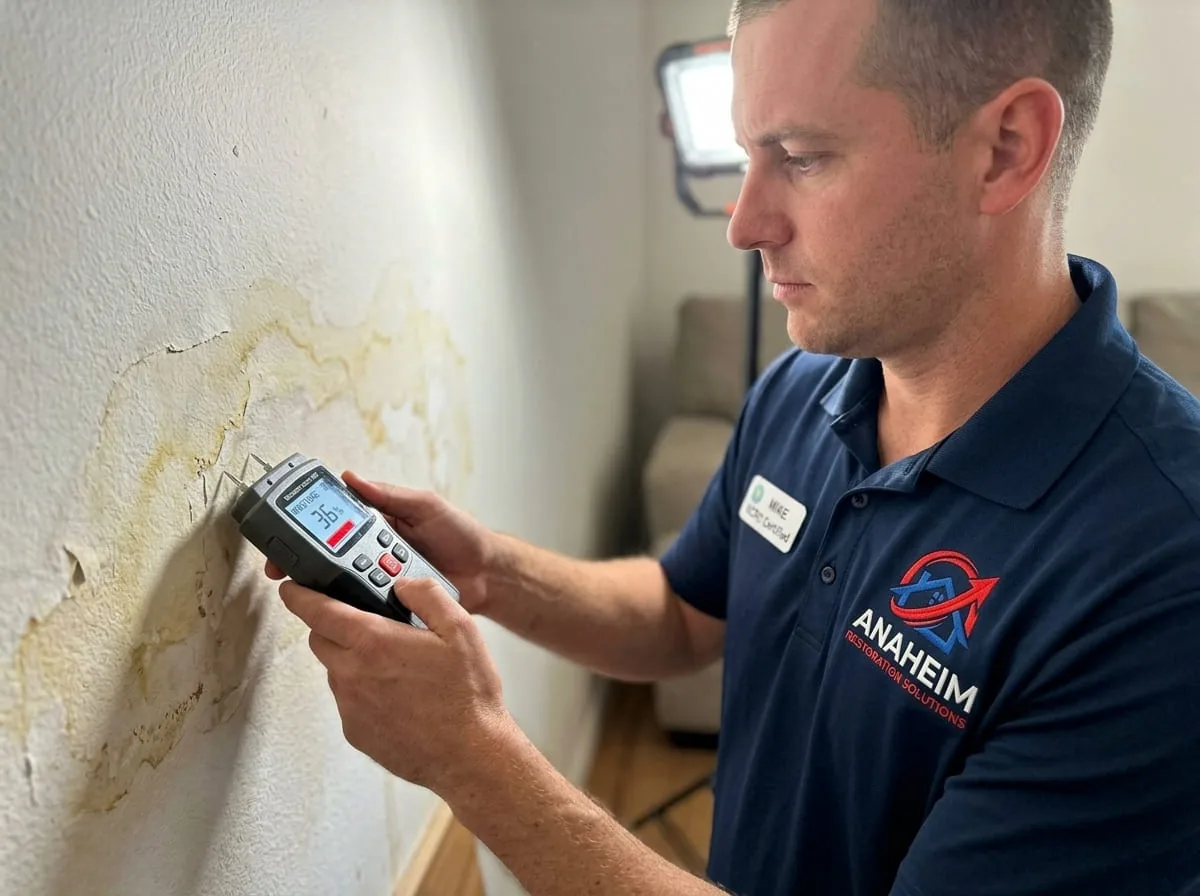
Ceilings and walls tell a story after water damage, but not always an obvious one. A stain in one corner of a ceiling can trace back to a roof leak, an upstairs bathroom, or even a slab leak wicking moisture upward — the visible damage and the actual source aren't always in the same place. This page covers how to read the signs, why ceiling water damage carries a real structural risk, and what the repair process looks like.
Signs You're Looking At
- Brown or yellow staining — a ring pattern usually means water has dried between events; a fresh, spreading stain means it's still active.
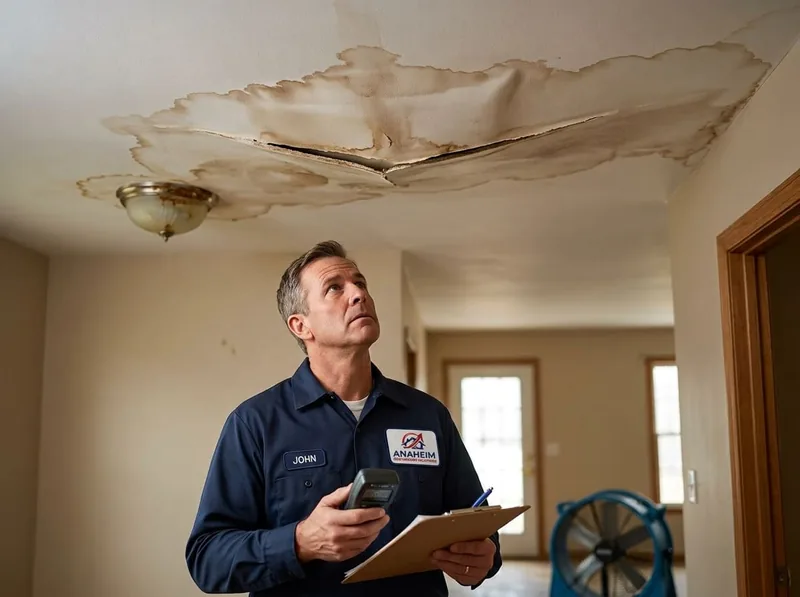
- Sagging or bulging — drywall and plaster absorb water and lose structural rigidity; a visibly sagging ceiling section is carrying trapped water weight and carries a real risk of collapse.
- Bubbling or peeling paint — moisture pushing paint away from the surface underneath, often an early sign before staining becomes obvious.
- A musty smell without visible staining — can indicate moisture trapped inside a wall cavity that hasn't surfaced yet.
Older Homes: Plaster vs. Drywall
Some of Anaheim's older homes, particularly those built before drywall became the standard postwar material, still have plaster-and-lath ceilings and walls, which behave differently under water exposure than modern drywall. Plaster can hold water longer before showing visible damage, then fail more abruptly once it does. Newer construction with standard drywall tends to show staining and softening earlier, which can actually work in your favor by giving an earlier warning sign.
When to Vacate the Area
If a ceiling is visibly sagging, bulging downward, or you can see water actively dripping through it, stay out of that room and keep others out until it's been assessed — a saturated ceiling section can fail without much additional warning, and the weight of water plus building material presents a real injury risk. This is one of the clearer safety lines in water damage: staining is a repair issue, sagging is a stay-away issue.
Repair and Restoration Process
- Identify the actual water source, which may require checking a roof, an upstairs plumbing fixture, or HVAC condensation lines, not just the visible ceiling.
- Extract any pooled water and remove sections of drywall or plaster that are saturated beyond drying.
- Dry the remaining structure — framing, insulation, and any salvageable drywall — with monitored equipment.
- Repair or replace damaged sections once the structure reads dry, matching texture and paint where visible repair is needed.