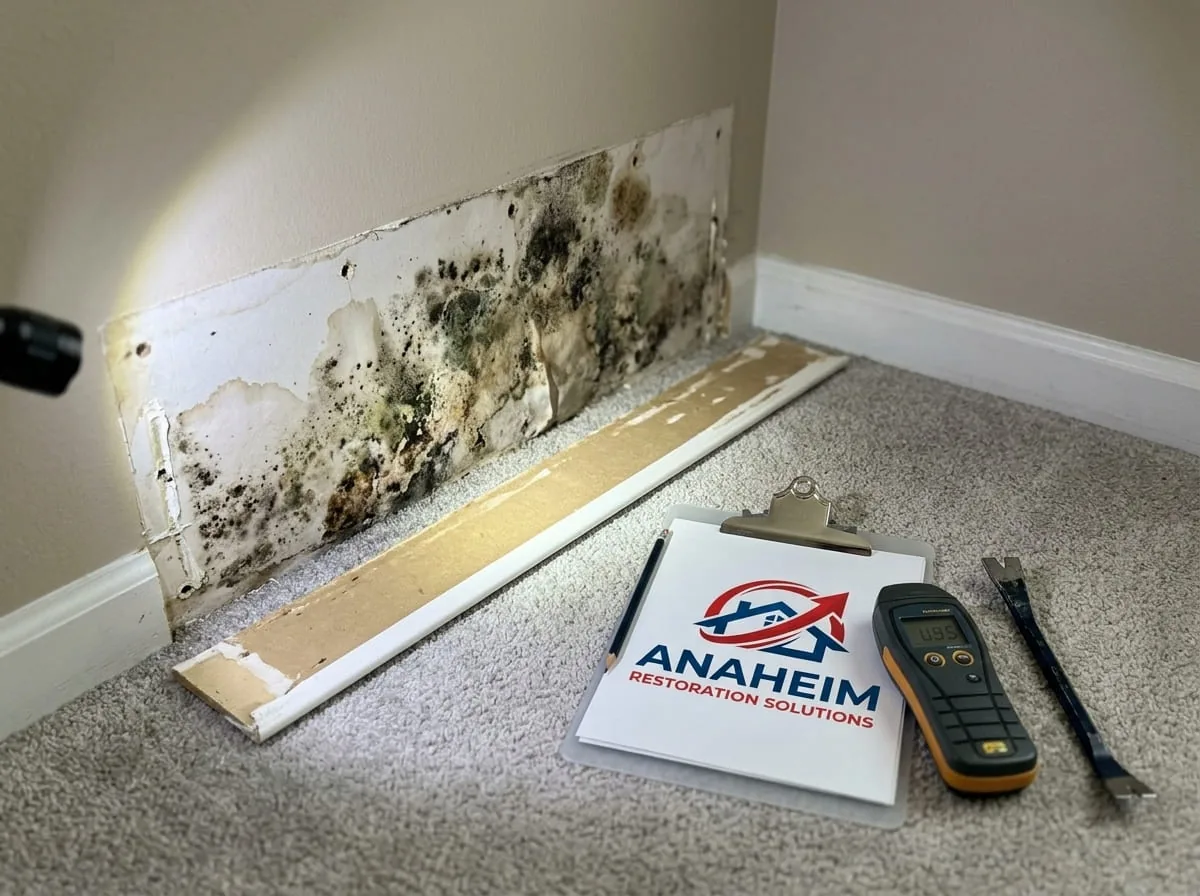
Mold after water damage is one of the most common calls our network receives — and one of the most time-sensitive. Whether the original event was a burst pipe, a slow leak inside a wall, an overflowing appliance, or storm water that got into a wall cavity, mold can begin developing well before it becomes visible. If you've had any water event in the last few days and you're now noticing a musty smell, discoloration, or soft, damp material, the mold remediation specialists in our network can inspect the area and begin containment right away.
This page focuses specifically on mold that follows a water damage event. If the leak or flood is still active, or happened very recently and you haven't addressed the water itself yet, start with Emergency Water Damage Restoration — stopping and extracting the water is always the first step, whether or not mold has appeared yet.
Why Water Damage and Mold Are the Same Emergency
Mold needs moisture, an organic material to grow on, and time. Drywall, wood framing, subflooring, insulation, and carpet padding all qualify as food sources, and a typical Anaheim home has all of them. What separates a routine water damage job from a mold remediation job is almost always how long the material stayed wet and whether it was dried completely — not just on the surface, but inside wall cavities and under flooring where a moisture meter, not the naked eye, is needed to confirm dryness.
This is exactly why our network treats structural drying as a mold-prevention step, not just a water-damage step. The structural drying and dehumidification process uses commercial air movers and dehumidifiers to pull moisture out of materials before mold has the time and conditions it needs to establish itself. When that drying is done quickly and completely, many water damage jobs never turn into mold remediation jobs at all.
Common Sources That Lead to Mold After Water Damage
In Anaheim and the surrounding area, mold-after-water-damage cases most often trace back to:
- Burst or slow-leaking pipes inside walls — especially in older homes built during Anaheim's postwar boom, where original galvanized steel supply lines can corrode from the inside and fail after decades of service
- Appliance leaks and overflows from water heaters, washing machines, dishwashers, and refrigerator supply lines
- Roof and ceiling leaks that go unnoticed until a stain or soft spot appears
- Storm and rain intrusion during Southern California's short, intense winter atmospheric-river events
- Sewage backups, which carry both a contamination risk and a mold risk if not fully remediated
Signs Mold Has Developed After a Water Event
Not every water event leads to mold, but watch for:
- A musty odor that develops in the days after the water event, even after visible water is gone
- Discoloration on drywall, baseboards, or wood framing near the original leak
- Soft, bubbling, or bowed drywall — a sign moisture is still trapped behind the surface
- Any material that was wet for more than 24–48 hours before drying began
- Musty smells or visible spotting inside cabinets, closets, or built-ins near the affected wall
What's Salvageable vs. What Isn't
Whether material can be dried and saved or needs to be removed depends on the material, how long it stayed wet, and whether contamination (like sewage) was involved. As a general pattern: structural wood framing and subflooring can often be dried and saved if caught early; drywall and insulation are more likely to need removal once mold has established; carpet padding saturated for more than a day or two is rarely salvageable. The professionals in our network make this call on-site, material by material, rather than applying a blanket rule to the whole affected area.
Before Help Arrives
If you're waiting on a technician:
- Stop the water source if it's safe to do so (shut off a supply valve, turn off an appliance)
- Increase ventilation to the affected area if that's practical — open windows, run a fan pointed away from unaffected rooms
- Avoid disturbing visible mold growth — scrubbing or dry-brushing it can release spores into the air
- Don't run central HVAC if the affected area is near a return vent, since it can spread spores through the duct system
- Photograph the damage for your insurance file before any cleanup begins
Avoid entering a room with standing water anywhere near an electrical outlet, panel, or plugged-in appliance, and don't attempt to handle sewage-contaminated material yourself — leave both to trained professionals.
Residential and Commercial Considerations
In a home, mold after water damage often concentrates around one leak point — a bathroom wall, a kitchen appliance, an attic access. In commercial buildings, the same event can affect a much larger footprint through shared walls, drop ceilings, and HVAC systems, and often needs to be scoped around business hours or tenant occupancy. Our network handles both, and coordinates a residential mold remediation project and larger jobs like commercial mold remediation differently from the first site visit.
The Remediation Process, Once Mold Is Confirmed
Once a technician confirms mold is present, the general approach follows a consistent order: contain the affected area to stop spores from spreading to unaffected parts of the property, remove and dispose of unsalvageable material, clean and treat salvageable surfaces, dry the space completely, and verify the work before calling the job finished. If documentation of the result is needed — for a landlord, buyer, insurer, or your own peace of mind — post-remediation verification and clearance testing confirms the space meets an acceptable condition before containment comes down.