Mold in a home almost always has a story behind it — a leak that went unnoticed, a bathroom fan that hasn't worked properly in years, a crawl space with a slow moisture problem, or storm water that got in during a heavy winter. Anaheim Restoration Solutions connects homeowners with licensed, insured mold remediation specialists who inspect the property, identify the moisture source, and remove the mold safely and completely, rather than just addressing what's visible on the surface.
Where Mold Shows Up in Anaheim Homes
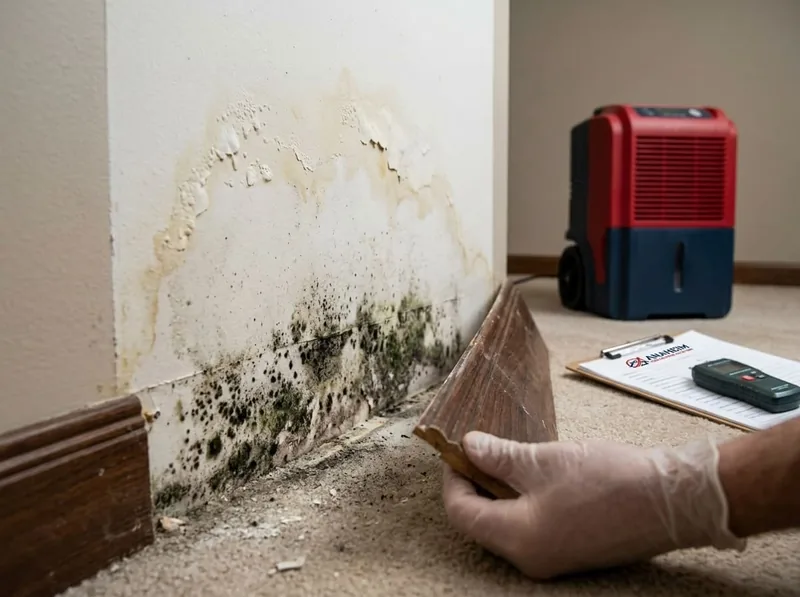
- Bathrooms and laundry areas with poor ventilation or a slow leak around a fixture
- Kitchen areas near dishwashers, refrigerators, or under-sink plumbing
- Attics with roof leaks or inadequate ventilation
- Crawl spaces in older homes, where moisture can sit unnoticed for extended periods
- Any wall or ceiling area that experienced water intrusion and wasn't fully dried
Why Anaheim's Housing Stock Matters
A lot of Anaheim's residential mold work traces back to the city's building history. The postwar tract housing built through the late 1950s and 1960s, when Anaheim's population and footprint grew rapidly after Disneyland opened in 1955, commonly used galvanized steel supply piping — a material that corrodes from the inside over 50 to 70 years and is a well-documented source of slow, hidden leaks. Homes in newer areas like Anaheim Hills, developed from the 1970s onward with copper or PEX plumbing, see fewer of these plumbing-age issues but can still develop moisture problems from irrigation, hillside drainage, or newer appliances. Either way, the moisture source has to be found and corrected, not just treated at the surface, or the mold will return.
The Residential Remediation Process
A typical residential job starts with an inspection to confirm the extent of the mold and identify the moisture source, then moves to containment of the affected area, removal of unsalvageable material (often drywall, insulation, or carpet padding), cleaning and treatment of surfaces that can be saved, and full drying of the space. The final step corrects the underlying cause — repairing or replacing the leak source, improving ventilation, or addressing a drainage issue — since remediation without fixing the cause tends to be a temporary fix.
Living in the Home During Remediation
Whether you can stay in the home during the work depends on the size and location of the affected area. A single contained bathroom or closet job often allows the rest of the home to stay in use. Larger jobs, or those involving HVAC systems, may call for temporary relocation of that part of the home until containment and drying are complete. The technician handling your job can walk through what makes sense for your specific situation.
When It Started With Water Damage
If your mold problem followed a recent leak, appliance failure, or flood, Mold After Water Damage addresses that specific situation, and pairing mold remediation with proper structural drying and dehumidification gives the best chance of preventing a repeat problem.
Before Help Arrives
- Keep the affected room closed off if possible
- Avoid disturbing visible growth
- Don't attempt do-it-yourself demolition around mold-affected drywall or flooring
- Photograph the area for insurance purposes
- Address any active leak safely if you're able to shut off the water source