
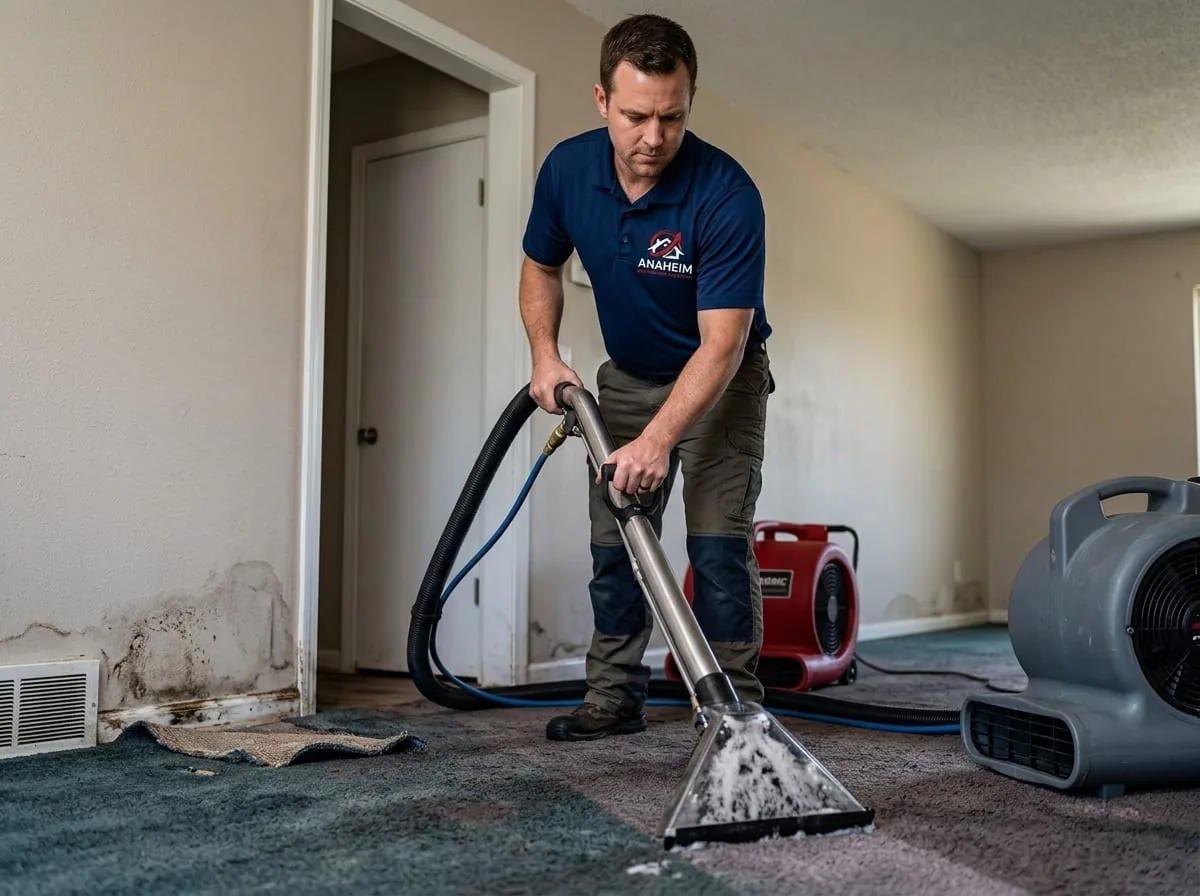
Extraction is the step that happens before anything else can. Until standing water is physically removed, drying equipment is working against a losing battle — a dehumidifier can't out-dry a room that still has an inch of water on the floor. Water extraction and removal is a distinct, foundational service, whether the source was a burst pipe, an overflowing appliance, or storm water that made its way indoors.
How Professional Extraction Differs from a Wet Vac
A household shop vacuum can pull surface water off a hard floor, but it isn't built for volume, saturation, or speed. Restoration professionals use truck-mounted extraction units and high-capacity portable extractors that move gallons of water per minute, along with submersible pumps for deeper standing water. On carpet and padding, weighted or flood extraction tools push water out of the fibers and backing rather than just skimming the surface — padding that's been sitting in water for more than a few hours is usually not salvageable and gets removed rather than dried in place.
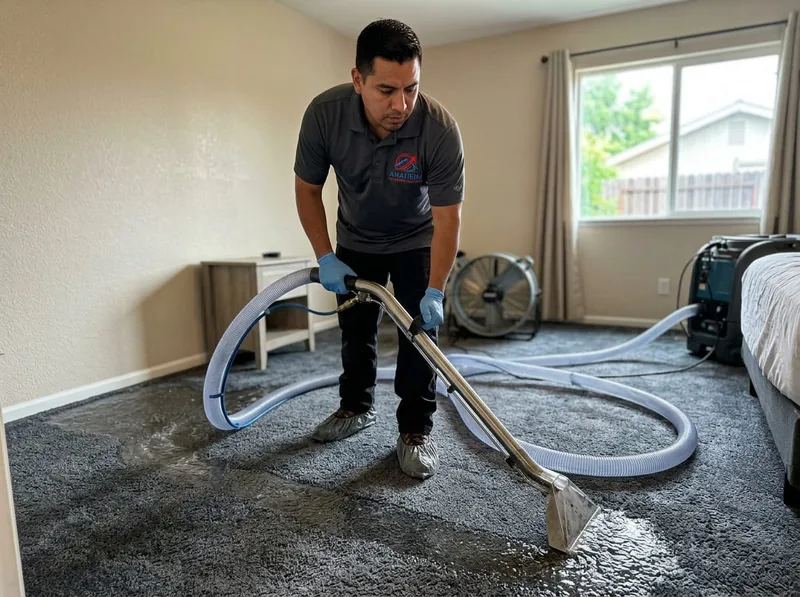
What Gets Extracted, Room by Room
- Hard flooring — standing water is pumped or extracted off the surface, then moisture trapped underneath (tile grout lines, expansion gaps) is addressed with targeted drying.
- Carpet and pad — water is extracted from the carpet fibers; soaked padding is typically removed rather than dried, since it rarely dries fully in place and can trap contamination.
- Furniture and upholstery — extraction from cushions and frames where salvage is realistic; otherwise items are documented and set aside.
- Wall cavities — in some cases, small extraction holes near the base of a wall let trapped water drain and speed up drying without removing the whole wall.
Why Speed Matters Here Specifically
Extraction speed directly affects how much of a property is salvageable. Water sitting on hardwood for six hours behaves very differently than water sitting for 48 hours — cupping and swelling accelerate the longer moisture stays in contact with wood. Drywall wicks moisture upward from the baseboard over time, meaning a delay in extraction can turn a floor-level issue into a wall-replacement issue. This is one of the clearest cases in restoration where hours, not days, decide the outcome.
After Extraction: What Comes Next
Extraction removes bulk water, but it isn't the end of the process — materials still hold moisture that needs to come out through drying. See structural drying and dehumidification for what happens after extraction is complete.