
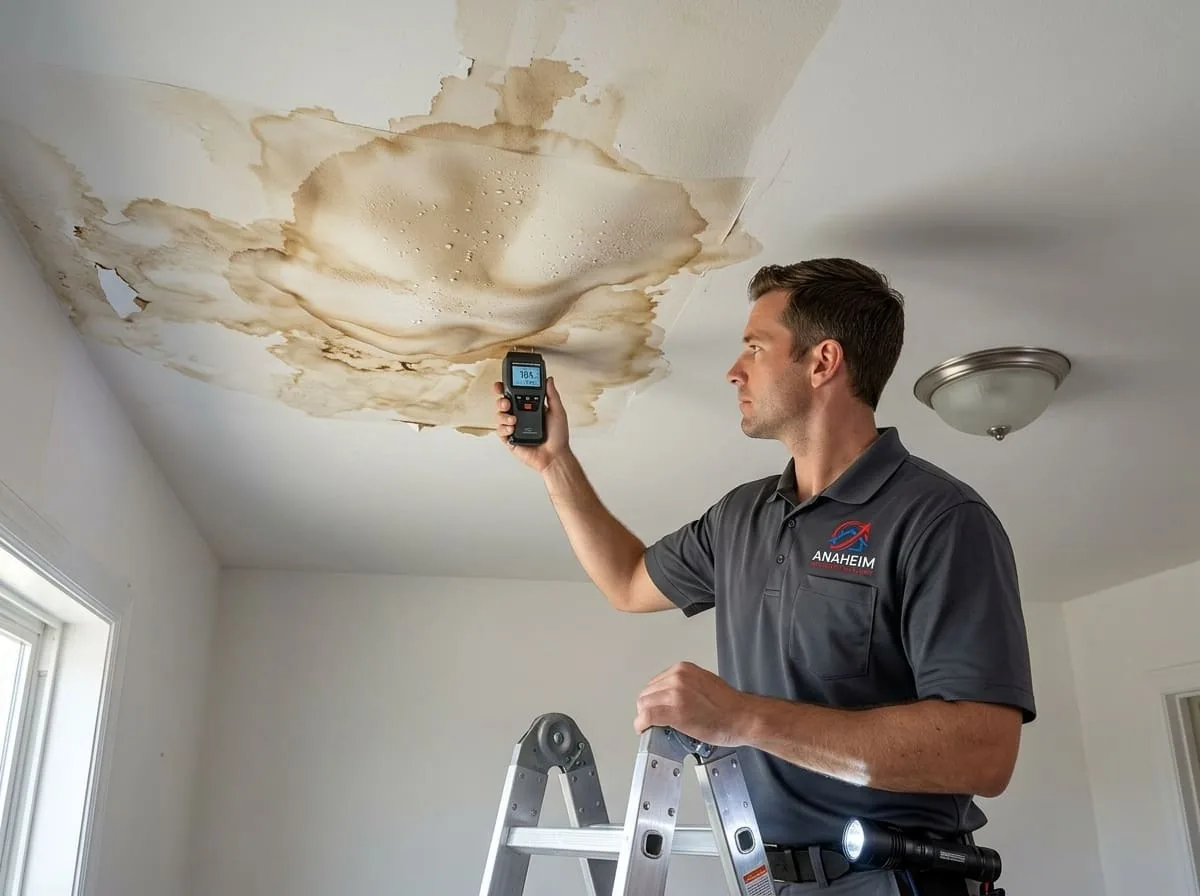
A wall can look, feel, and even smell dry within a day or two of a leak, and still have a soaked cavity behind the surface. That gap between looking fine and being fine is exactly why hidden moisture is one of the more consequential parts of water damage restoration, and why professionals rely on tools rather than eyeballing it.
Here's what those tools actually do, why relying on stains, smell, or touch alone isn't reliable, and where hidden moisture tends to show up most often once someone actually goes looking for it.
Why Hidden Moisture Is the Real Risk
Drywall's painted surface can dry to the touch well before the insulation, framing, or backside of the panel does. If that hidden moisture isn't found and addressed, it sits inside a dark, enclosed cavity, close to ideal conditions for mold, while everything looks fine from the room. By the time hidden moisture shows itself as a visible stain, odor, or soft spot, it's often been present for a while already.
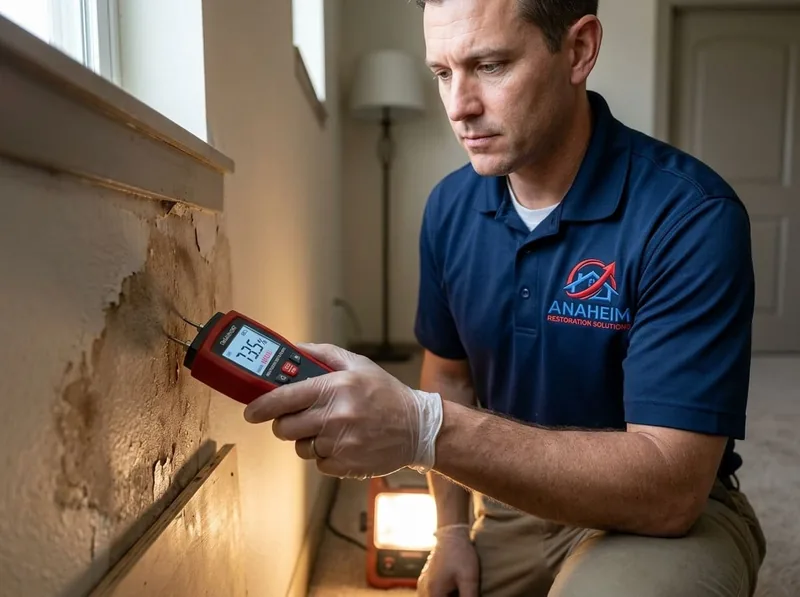
Moisture Meters: Pin and Pinless
Pin-type meters use two small probes inserted slightly into a material to measure electrical resistance, which correlates with moisture content, useful for getting a specific reading at a specific depth. Pinless meters use electromagnetic sensing through the surface without puncturing it, useful for quickly scanning a larger area to find where moisture is present before deciding where to look closer. Both give a number that can be compared to a dry standard for that material, rather than a guess.
Thermal Imaging: Mapping, Not Measuring
Thermal cameras don't measure moisture directly; they detect temperature differences on a surface, and evaporating moisture typically shows up as a cooler patch than the surrounding dry material. This makes thermal imaging a strong tool for quickly mapping where a moisture problem might be across a wall, ceiling, or floor, which then gets confirmed with a moisture meter at the spots the thermal image flagged. Used together, the two tools cover both where to look and how wet it actually is.
Borescopes and Small Inspection Holes
When meter readings and thermal imaging suggest a problem behind a finished surface but don't fully confirm it, a small inspection hole with a borescope camera lets a technician actually see inside the cavity without opening up the whole wall. This is typically a last step, used to confirm a decision rather than as the first move, and the resulting hole is small enough to patch easily regardless of what's found.
Building a Moisture Map and Drying Log
On any job beyond a minor spill, professionals track moisture readings across multiple points and over multiple days, building both a map of where the problem is and a log of how it's trending as drying equipment runs. That log serves two purposes: it tells the technician when a space has actually reached a dry standard, and it becomes part of the documentation that supports your insurance claim. See insurance documentation after water damage for how that record gets used.
Why Guessing by Smell, Stains, or Touch Falls Short
A musty smell is a real signal worth acting on, but its absence doesn't mean there's no moisture; many hidden moisture problems don't smell like anything yet. A wall can feel bone-dry to the touch on the surface while the cavity behind it stays wet for days or weeks longer. None of this is a criticism of paying attention to these signs; it's a reason not to stop there once a leak has happened.
Where Hidden Moisture Most Often Turns Up
A handful of locations account for most hidden moisture findings on a typical job: the wall cavity directly below a known leak point, the base of a wall where water has wicked upward from flooring, ceiling cavities beneath a bathroom or an upper-floor plumbing run, and the area immediately surrounding a window or door where flashing has failed gradually over time. Crawl spaces present their own version of this problem, since moisture there can persist for a long time without ever becoming visible from inside the living space above. See crawl space water damage for how that specific area gets assessed.
When Hidden Moisture Points to a Bigger Issue
In older Anaheim-area homes with original galvanized steel plumbing, a slow pinhole leak inside a wall can go undetected for a long time precisely because there's no dramatic flooding event to notice, just a gradually rising moisture reading in one section of wall. Finding that early, before it becomes a mold problem or a structural issue, is one of the more valuable things a moisture inspection can catch. See mold after water damage and how quickly mold can become a concern after water damage for what happens if it isn't caught in time.
Older Homes and Newer Homes Get Checked Differently
In an older Anaheim-area home built during the postwar tract boom, a moisture inspection often needs to account for the possibility of a slow, ongoing source, such as an aging galvanized pipe, rather than assuming all moisture traces back to one known event. That can mean checking more than just the room where a leak was found. In a newer home in an area like Anaheim Hills, built with copper or PEX plumbing, hidden moisture more often traces back to a single identifiable event, such as an appliance failure or an irrigation line near the foundation, and the inspection can usually stay more tightly focused around that source.
How Often a Space Gets Re-Checked During Drying
Once drying equipment is in place, a technician typically returns to take follow-up readings every day or every other day rather than leaving equipment running unmonitored for a week and checking once at the end. This matters because drying doesn't proceed at a perfectly even rate. A cavity that seemed to be drying well can plateau if equipment isn't adjusted, and catching that early, through regular readings rather than a single final check, keeps a job from running longer than it needs to.
What You Can Reasonably Check Yourself Between Visits
Between professional readings, it's reasonable to keep an eye on whether a musty smell is developing, whether a previously flagged area feels newly soft or spongy, or whether a stain appears to be spreading rather than staying the same size. None of these observations replace an actual meter reading, but noting them and mentioning them at the next visit gives the technician useful information, and can occasionally speed up a decision if something is changing faster than expected between scheduled checks. A technician who explains the specific reading behind a decision, rather than a general impression, is giving you information you can actually verify. That kind of transparency is a reasonable thing to expect and to ask for directly. That's a reasonable question that any qualified technician should be able to answer clearly.